
How to pack a hiking backpack so it carries well
How to pack a hiking backpack: heavy items close to your back, light ones at the bottom, rain gear on top and small things in pockets you can reach.
Élodie Fontaine5 min read
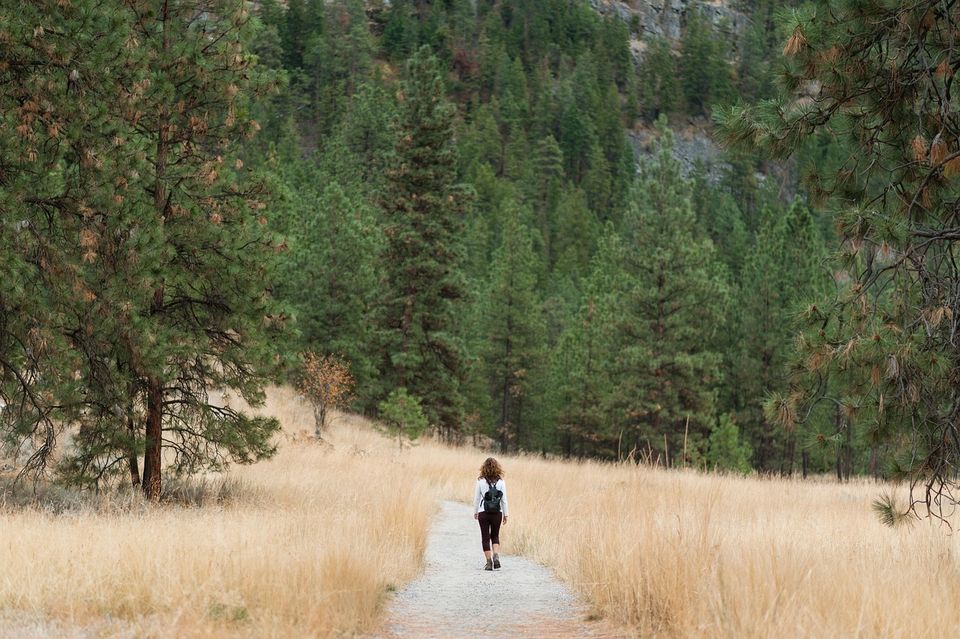
A pack carries best when the heavy items sit close to your back, in the middle, and light bulky items go at the bottom. Keep things you need often on top or in pockets. Rain gear and water go where you can reach them without taking the pack off.
The packing order
Think of the pack in three zones.
| Zone | What goes there | Why |
|---|---|---|
| Bottom | Sleeping bag, spare clothes | Light, soft, cushions the base |
| Middle, close to back | Food, water, stove, tent body | Heavy, keeps weight over your hips |
| Top and outside | Rain jacket, snacks, hat, map | Quick to reach |
What goes wrong first. Heavy items sit too far from your back. That pulls you backward and wears out your shoulders. Move the heavy load closer to the spine.

Step by step
- Lay out the load. Group by use: sleep, cook, clothes, food, safety, tools. Look at the pile and leave out what you do not need.
- Use dry bags. One for clothes, one for sleep, one for food. They keep things dry and easy to find.
- Pack the bottom. Sleeping bag and soft items go in first.
- Pack the middle. Heavy items go against your back, near the centre. Fill gaps with soft clothes so nothing shifts.
- Pack the top. Items you will need before camp: rain jacket, extra layer, snacks, first aid kit.
- Use pockets. Phone, map, snacks, sunscreen and a headlamp live in hip belt and lid pockets.
- Attach outside items. Poles, a sleeping pad or a tent can go on the outside, strapped well so they do not swing.
- Adjust the straps. Tighten the hip belt first, then the shoulder straps, then load lifters. The hips should carry most of the weight.
How much to carry
Keep the load as light as you can. If you are new, try a short trip first and see how it feels.
Every item should pass one test: have I used it, or would I be in trouble without it? If it is neither, leave it. For a day trip list, see the day hike essentials checklist.
Water
Water is heavy. A liter weighs about one kilogram. Carry what you need, plan refill points and keep the bottle where you can reach it. A bladder with a hose lets you sip as you walk.
Common mistakes
- Packing the sleeping bag on the outside, where rain gets it.
- Putting the heaviest item at the bottom, which pulls the pack down.
- Burying the rain jacket at the bottom.
- A loose load that shifts and rubs.
- A pack that is too big, which invites more stuff.
Fit matters
A well packed bag will not feel right if it does not fit your back. Have the shop measure your torso length. Feet matter too, so read hiking boots vs trail runners and how to prevent blisters when hiking.
Packing for a day versus a night
A day pack is simple. An overnight pack needs a bit more order.
| Factor | Day hike | Overnight |
|---|---|---|
| Size | About 15 to 30 liters | About 40 to 60 liters |
| Weight | Water, food, layers, first aid | Plus tent, bag, pad, stove |
| Main problem | Not carrying enough water | Weight and balance |
| Packing order | Heavy in the middle, rain jacket on top | As above, plus sleeping gear at the bottom |
A larger pack tempts you to bring more. Pick the smallest pack that fits your gear.
When a pack hurts
Check these in order.
- Sore shoulders: the hip belt is too loose. Move weight to your hips.
- Sore hips: the belt is too tight, or sitting too low. Move it up and adjust.
- Back pain or sweat: the pack is too far from your back. Re-pack the heavy items closer.
- Pack swings: tighten the compression straps and the load lifters.
- Neck pain: the shoulder straps are too tight, or the pack is too high.
If none of these help, the pack may be the wrong size. A shop can measure your torso and fit the pack.
What goes wrong first. Hip belt too loose. Most of the weight should rest on your hips, and shoulder straps keep the pack close.
Pack once, then adjust on the first mile
After a mile of walking, stop. Tighten the straps again. Move anything that bounces. A pack settles as you walk, and small changes make a big difference.
Quick questions
Should heavy items go at the top or bottom?
Middle, close to your back, for most hiking on trails. The exact spot shifts a little for rough ground.
How do I keep my pack dry?
A rain cover helps, but a dry bag liner inside is more reliable.
How do I stop things rattling?
Fill gaps with soft clothes and tighten the compression straps.
What should be easy to reach?
Water, snacks, rain jacket, sunscreen, phone and a map.
More to read
Keep reading
Why turning back is the best decision a hiker can make
A short column on why turning back before the summit is a skill, how to set a turnaround time and why it keeps you hiking for years.
Karim Belkacem4 min read
How to prevent blisters when hiking
How to prevent blisters when hiking: fit, socks, lacing and the moment to stop. A simple plan to keep your feet from rubbing raw on the trail.
Élodie Fontaine2 min read
Hiking boots vs trail runners: which is better for you
Hiking boots vs trail runners: boots give ankle support and protection on rough ground, trail runners are lighter and dry faster. Here is how to choose.
Élodie Fontaine3 min read
Day hike essentials checklist: what to carry in your pack
A day hike essentials checklist for beginners: water, food, layers, navigation, light, first aid and a plan, with a rule for how much to carry.
Élodie Fontaine4 min read
What to do if you get lost hiking: stop, think, stay put
What to do if you get lost hiking: stop early, stay calm, check your map, retrace only if sure, stay put if not and make yourself easy to find.
Élodie Fontaine2 min read
How to choose hiking socks that prevent blisters
How to choose hiking socks: pick wool or synthetic, never cotton, match thickness to your boot and carry a spare pair to keep your feet dry and blister free.
Élodie Fontaine2 min read