
How to set up a tent for the first time, step by step
How to set up a tent for the first time: pick flat ground, lay the footprint, build the poles, stake it down and add the rainfly in the right order.
Élodie Fontaine5 min read
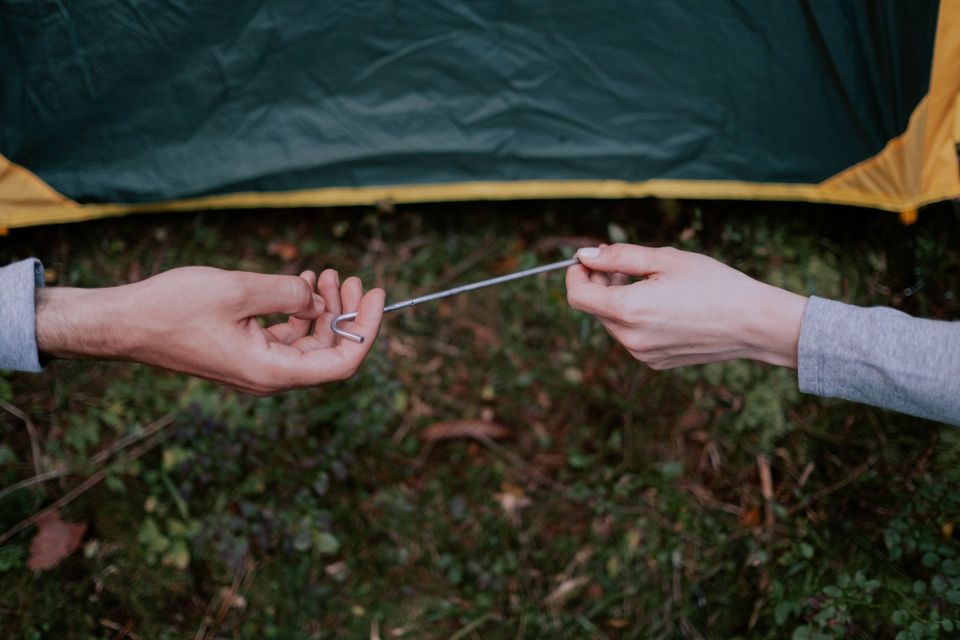
Setting up a tent for the first time takes about 15 minutes with a practice run and an hour without one. The order matters more than speed. Clear the ground, lay a footprint, build the frame, clip the tent on, stake the corners, then add the rainfly.
Before you leave home
Open the bag and check the contents against the maker's list: tent body, poles, stakes, rainfly, guy lines. Many tents print a diagram on the bag or the pole sleeve. Take a photo of it.
Put the tent up once in a yard or park. This is the best thing you can do.
Step 1: pick the spot
Choose flat ground, slightly raised, with no stones. Clear sticks and pine cones. Check overhead for dead branches. Face the door away from the wind. If it might rain, avoid low ground where water collects.

Step 2: lay the footprint
The footprint is a ground sheet under the tent. It protects the floor from damp and stones. Tuck the edges under so rain does not run between the layers.
Step 3: lay out the tent and stake one corner
Spread the tent body. Put a stake through one corner loop to keep it from blowing away. Do this even in calm air.
Step 4: build the frame
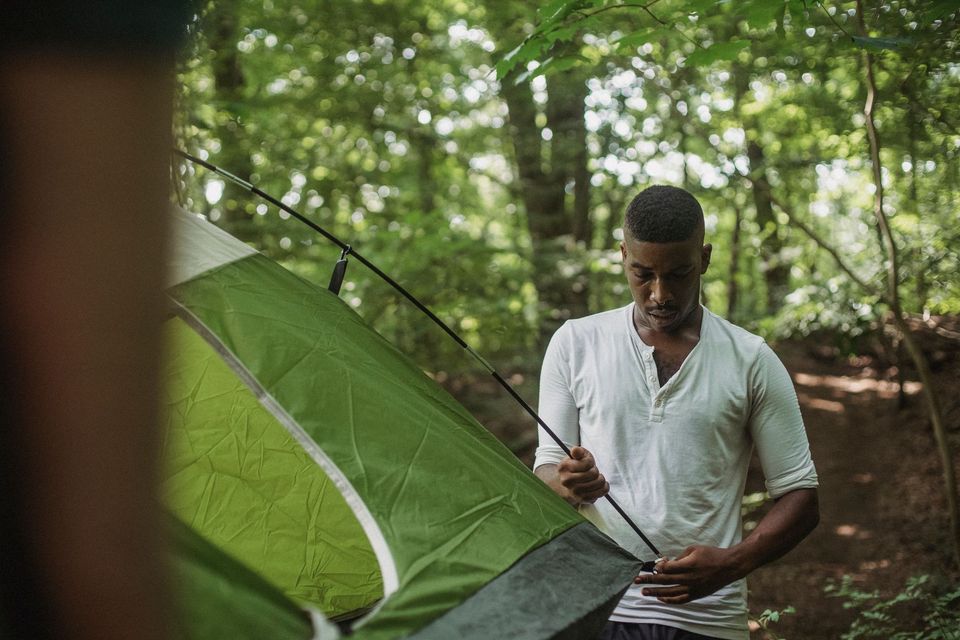
Join the pole sections. Thread each pole through its sleeve or attach the clips. Take your time with flexible poles and bend them gently. If one catches, pull it back and try again, because forcing it can snap the pole.
For most dome tents the poles cross at the top. Fix the pole ends into the corner grommets. The tent will stand up.
Step 5: stake the corners
Pull each corner out until the floor is flat, then push a stake in at about a 45 degree angle, leaning away from the tent. Stakes straight up pull out sooner. Tent stakes for sand and loose ground shows what to use if the ground is loose.
What goes wrong first. Stakes pull out in wind or soft ground. Add extra stakes and use the guy lines.
Step 6: add the rainfly
Throw the rainfly over the frame. Match the door to the door. Clip or buckle it at the corners. Check that it does not touch the tent walls, because rain can soak through where they touch. Tighten the straps.
Step 7: guy lines
Attach cord to the loops on the fly, stretch them out and stake them. Tension them evenly. This adds stability in wind and keeps the fly off the tent.
Step 8: set up inside
Put your sleeping pad and bag in, shoes by the door and a headlamp in a pocket. Zip the doors when you are away so bugs do not get in.
Packing it up
Shake the tent out and let it dry before you pack it. A damp tent will smell and may grow mould. If you must pack it wet, open it at home as soon as you can. Fold it the same way each time.
If you are unsure what to buy, how to choose a camping tent gives a simple rule.
Setting up in wind
Wind turns a simple pitch into a fight. Use this order.
- Stake the windward corner first, the one the wind hits.
- Keep the tent body low to the ground until the poles are in.
- Ask someone to hold a corner while you work.
- Put the poles in with the door facing away from the wind.
- Put the fly on last, and keep a firm hold of it as it goes over.
If gusts are strong, wait. A tent can fly off and take a pole with it. For loose ground and strong wind, tent stakes for sand and loose ground explains better stakes.
Fixing common problems
| Problem | Likely cause | Fix |
|---|---|---|
| Walls sag | Guy lines slack | Re-tension the lines and the corner straps |
| Fly touches the inner tent | Not tight enough | Adjust the buckles and add guy lines |
| Door will not zip | Tent twisted or uneven | Loosen one corner, then re-stake square |
| Pole will not seat | Wrong pole or the wrong end | Check the colour or length marks |
| Floor wet in the morning | Condensation or a puddle | Open vents, use a footprint, move higher next time |
A note on condensation. Your breath adds water to the air. In a closed tent it settles on the walls. Open a vent at the top and one low down, so air moves through.
Take care of the tent
Do not pull a pole to straighten it. Work it gently. Do not drag the tent over stones. Pack the stakes in their own bag so they do not tear the fabric. Store the tent loose and dry at home when you can, not squeezed tight in its bag all year.
Quick questions
How long does it take?
Makers often claim a few minutes, but first-timers should plan for about half an hour on the day. Practice speeds it up.
Do I need a footprint?
It helps. It protects the floor and adds some damp resistance. A ground sheet cut to size works too.
What if the poles do not fit?
Check that each sleeve matches the right pole. Look for a diagram on the bag, or the maker's page.
What if it starts to rain mid-setup?
Get the rainfly on first if you can, then the frame under it. Keep moving.
More to read
Keep reading

Easy camping meals for beginners with one pot or no stove
Easy camping meals for beginners: one-pot dinners, no-cook backups and a simple plan for breakfast, lunch and dinner on a two-night trip.
Élodie Fontaine4 min read
What to do when it rains while camping
What to do when it rains while camping: get gear under cover, keep one set of clothes dry, stay out of low spots and decide when to pack up and go home.
Élodie Fontaine2 min read
How to choose a camping tent for your first trips
How to choose a camping tent: pick the size, seasons and weather cover that match your trips, and learn what fails first in wind and rain.
Élodie Fontaine4 min read
Beginner camping gear checklist
A beginner camping gear checklist for a first overnight trip: what you really need for sleep, food, light and safety, and what to borrow or skip.
Élodie Fontaine2 min read
Car camping vs backpacking for beginners: where to start
Car camping vs backpacking for beginners: start with car camping to learn your gear and habits, then move to backpacking once you know what you need.
Karim Belkacem4 min read
How to pick a campsite and a pitch for beginners
How to pick a campsite and a tent pitch as a beginner: choose a simple site close to home, then pick flat, dry ground away from hazards and wind.
Élodie Fontaine2 min read