
How to stay warm in a tent in winter: a simple plan
How to stay warm in a tent in winter: insulate from the ground first, use a bag rated below the low, keep dry layers for bed and cut the wind.
Élodie Fontaine4 min read
The ground steals more of your heat than the air does. So staying warm in a tent in winter starts under you, not around you. Then it is about dry clothes, a good bag and blocking the wind.
This guide uses a short order: pad, bag, clothes, shelter, food and water.
Step one: the pad
A bag squashes under your weight, so it gives little warmth underneath. A sleeping pad fills that gap. Makers list an R-value, a number for insulation. Higher means warmer. For winter, pick a pad with a high R-value, and add a second foam pad under it if you can. Sleeping pad R-value for cold camping explains how to read it.
What goes wrong first. The cold from below. People often buy a thick bag and a thin pad. Fix: spend the effort on the pad first.
Step two: the bag
Pick a bag whose rating is below the forecast low, not equal to it. Plan with the comfort number. The limit number is a stretch. Sleeping bag temperature rating explained covers that. A liner adds a little warmth.
Keep the bag dry. Damp insulation loses warmth. Store it in a dry sack and do not breathe into the bag, because your breath adds moisture.
Step three: dry clothes for bed
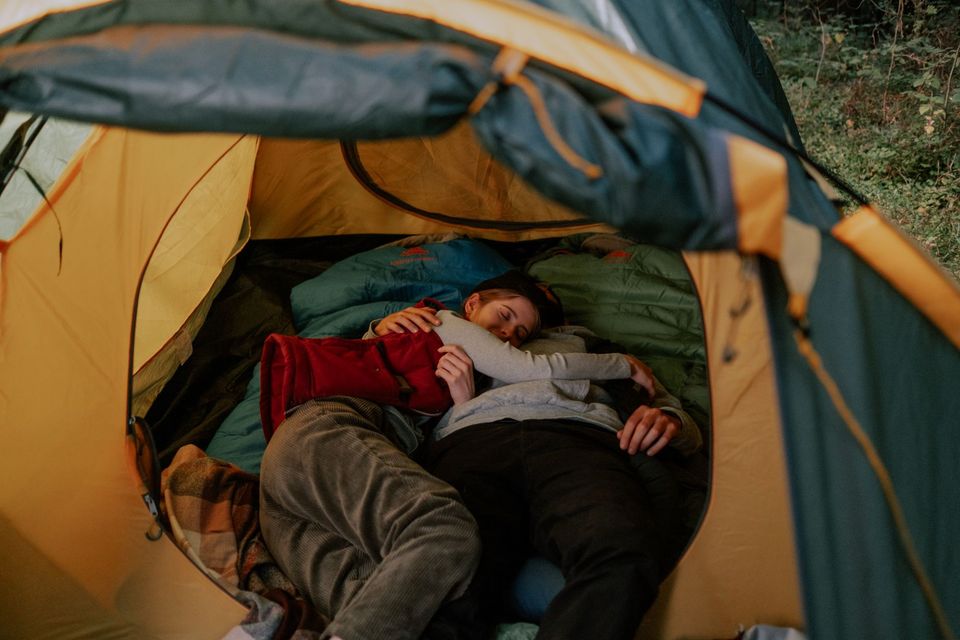
Sweat and damp clothes make you cold. Before bed, change into dry base layers, dry socks and a warm hat. Keep your day clothes outside the bag, or in the tent away from your face. Do not wear tight clothes, because they stop blood from reaching the feet.
| What | In the day | At night |
|---|---|---|
| Base layer | Wicking | Dry set kept for bed |
| Mid layer | Fleece or wool | Optional |
| Outer layer | Wind and rain shell | Off, keep nearby |
| Socks | Wool or synthetic | One dry pair |
| Head | Hat | Hat |
Step four: the tent and the wind
- Pick a spot out of the wind and off low ground where cold air collects.
- Use all the guy lines and close vents partway. Some air flow is needed to stop damp, but not a gale.
- Use a footprint or an extra tarp under the floor.
- Pitch the door away from the wind.
What goes wrong first. Condensation. Your breath turns into frost on the walls and drips on the bag. Fix: keep a small vent open, and wipe the walls with a cloth in the morning.
Step five: food and water
Eat before bed. A snack with fat and carbs helps your body make heat. Drink warm drinks, not hot ones you might spill in the bag. Fill an insulated bottle with hot water, make sure the lid is tight and put it in the bag near your feet. Keep water bottles upside down or in the bag, so they do not freeze at the neck.
Water and fuel maths. Example only. In cold weather you use more fuel because stoves burn slower and water starts cold. Count each meal and hot drink, take the boil time from the maker, and add half again instead of a third. Add a hot drink for the morning.
A note on heaters and flames
Do not run a fuel heater or a stove inside a closed tent. Carbon monoxide can build up and hurt you. Read tent heater safety before you decide to bring one.
Know when to leave
If anyone shivers hard, cannot stop, feels confused or sleepy, or has numb hands, warm them up and get help. Cold can become an emergency. Check the forecast and the official safety information for your area before you go. Tell someone your route and return time.
Quick questions
How do I stay warm in a tent when it is below freezing?
Use an insulated pad, a bag rated below the low, dry base layers, a hat and a bottle of warm water near your feet.
Should I wear my coat in my sleeping bag?
A thin insulated layer can help. A bulky coat can compress and block the bag's loft. Try it at home.
Does a smaller tent stay warmer?
A little. There is less air to warm. Wind and ground cover matter more.
Is it safe to bring a heater into a tent?
Most open flame or fuel heaters are not safe in a closed tent. Follow the maker's warnings, and read the safety page.
More to read
Keep reading

Sleeping bag temperature rating explained: comfort vs limit
Sleeping bag temperature rating explained: what comfort, limit and extreme numbers mean, and how to pick a bag for the coldest night of your trip.
Élodie Fontaine4 min read

Sleeping pad R-value for cold weather camping
Sleeping pad R-value for cold weather camping: what the number means, what to buy for frost and snow, and how to add warmth under you cheaply.
Élodie Fontaine2 min read

What to wear camping in cold weather: a three layer plan
What to wear camping in cold weather: a base layer to wipe away sweat, a warm middle layer and a shell for wind and rain, plus what to avoid.
Élodie Fontaine5 min read
Is it safe to use a heater in a tent? What to know
Is it safe to use a heater in a tent? Fuel and flame heaters can cause carbon monoxide poisoning and fires, so read this before you bring one camping.
Élodie Fontaine2 min read
Down vs synthetic sleeping bag for cold weather camping
Down vs synthetic sleeping bag for cold weather camping: down packs smaller and lighter, synthetic copes better with damp and is easier to care for.
Karim Belkacem4 min read
How to dry wet gear while cold camping, step by step
How to dry wet gear while cold camping: wring, shake, use body heat, rig a line and keep your sleep layers dry first, with fixes that work in frost.
Élodie Fontaine5 min read