
Trekking poles vs no poles: are poles worth it for hiking
Trekking poles vs no poles: poles help on steep, rough or slippery trails and with a heavy pack, but can get in the way on easy flat paths.
Karim Belkacem4 min read
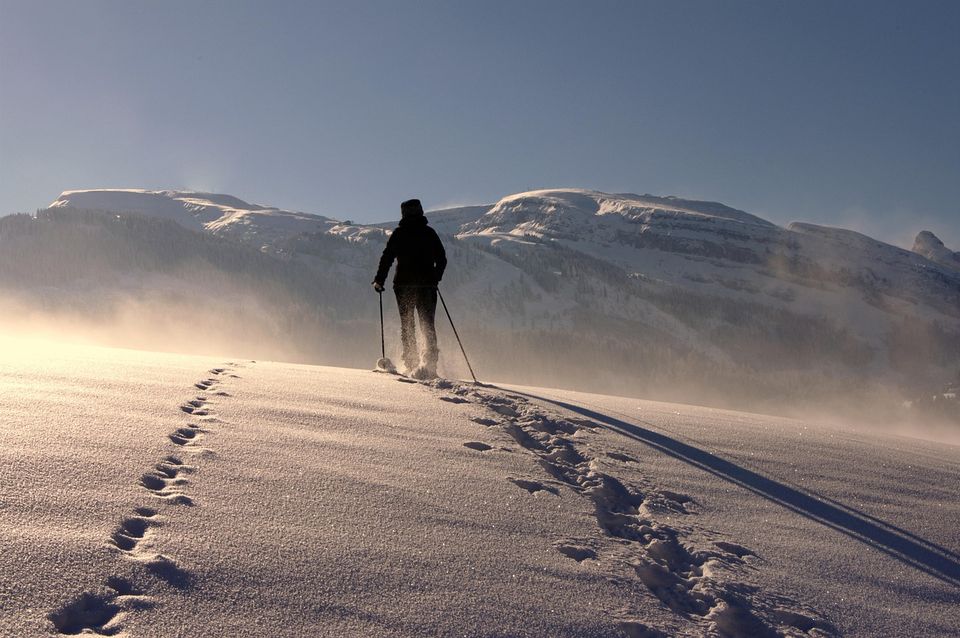
Verdict: poles are worth it for steep, rough or slippery trails, and for hikes with a heavy pack. On easy, flat paths, poles are optional and may feel like extra work. If you scramble with your hands, leave them stowed.
Which wins on
| Factor | Poles | No poles |
|---|---|---|
| Steep downhill | Take load off knees | Knees take more |
| Steep uphill | Arms help push | Legs do it all |
| Balance on rough ground | Better | Fine for most |
| River crossings | Extra stability | Less steady |
| Flat paths | Can feel like a chore | Easier |
| Hands free | No | Yes |
| Extra weight | Yes, small | None |
Pick poles if
- Your trail goes up or down for a long way.
- You carry a heavy pack, as on an overnight trip.
- The ground is wet, loose or snowy.
- You cross streams.
- Your knees or balance would welcome help.
Many hikers report that poles take some load off their knees on long descents. That is owners' experience, not a medical promise. Ask a health professional about joint or balance concerns.
Pick no poles if
- The path is flat and well made.
- You prefer to keep your hands free for photos, snacks or a map.
- The route has scrambles where you need your hands.
- You want the lightest pack possible.
The rule that matters most: the steeper and more uneven the ground, the more poles help.
How to use them
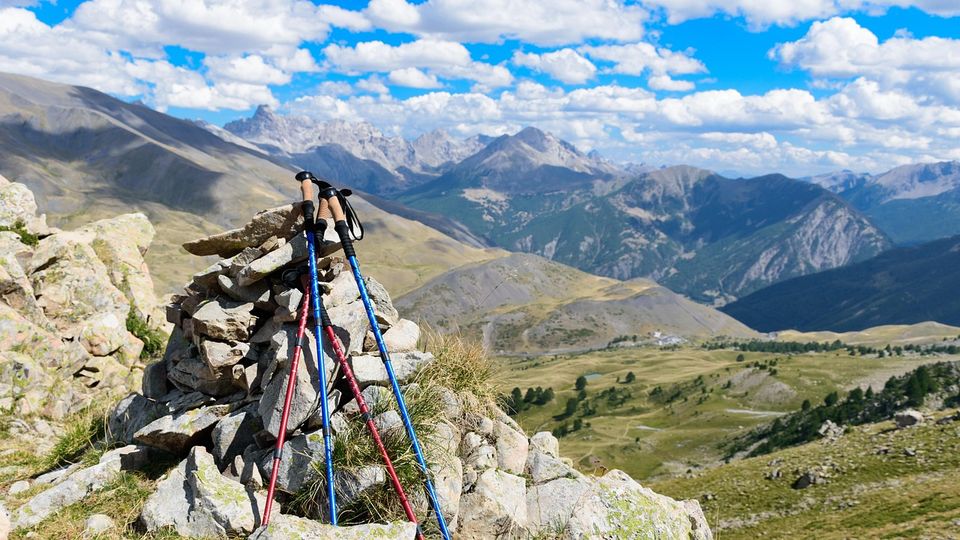
- Set the height so your elbow is at about a right angle when the tip is on the ground.
- Slip your hand up through the strap from below, then grip the handle.
- Swing opposite arm and leg, as in a natural walk.
- Lengthen them a little for downhill, shorten for uphill.
- Plant the poles ahead of you, not out to the side.
What goes wrong first
The wrist strap. A strap that is too tight or poorly set rubs and tires the wrist. Adjust it as the maker shows. Also, locks can slip, so check them before each descent.
A short caution
Do not use poles when you need both hands, such as on a steep scramble, or on exposed ground where a fall would be serious. Stow them on your pack first. Your feet matter as much as your poles. See hiking boots vs trail runners, and for packing, how to pack a hiking backpack.
Picking a pair
If you decide on poles, check these points.
- Length. Adjustable poles suit most people and let you change length for hills.
- Locks. Lever locks are easier to use with cold hands than twist locks.
- Grips. Foam and cork feel good in warm weather. Rubber is fine in cold.
- Weight. Lighter poles tire the arms less on a long day.
- Tips. Carbide tips grip rock and ice. Add rubber caps for paths and floors.
- Baskets. Small baskets stop the tip sinking in mud. Large ones help in snow.
Try them in a shop if you can. Pole height and grip feel are personal.
Getting used to poles
The first hour feels awkward for many people. Give it a few trips. Walk with a natural rhythm. Do not lean on the poles, because they should help your balance, not carry your whole weight.
Quick questions
Do I need two poles or one?
Two give more balance and spread the load. One is fine if you want a free hand.
Can I take poles on a plane?
Rules vary by airline and airport. Pack them in checked luggage unless the airline says otherwise.
Are carbon poles better than aluminium?
Carbon is lighter but can snap under side load. Aluminium bends. The right choice depends on use.
Are poles good for kids?
Short poles can help older kids. For small kids, a hand and a pace they enjoy work better.
More to read
Keep reading
Why turning back is the best decision a hiker can make
A short column on why turning back before the summit is a skill, how to set a turnaround time and why it keeps you hiking for years.
Karim Belkacem4 min read
How to prevent blisters when hiking
How to prevent blisters when hiking: fit, socks, lacing and the moment to stop. A simple plan to keep your feet from rubbing raw on the trail.
Élodie Fontaine2 min read
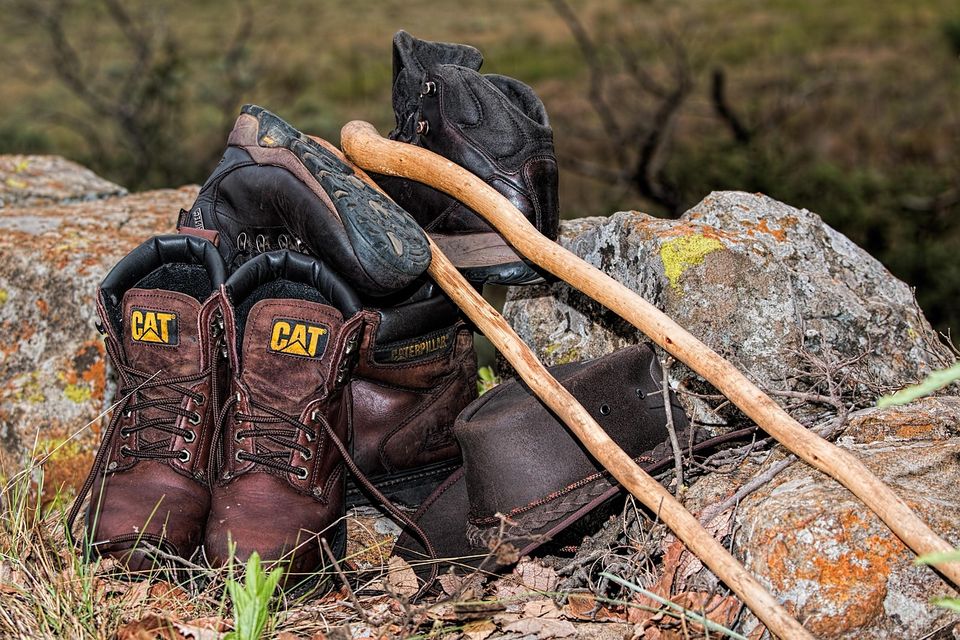
Hiking boots vs trail runners: which is better for you
Hiking boots vs trail runners: boots give ankle support and protection on rough ground, trail runners are lighter and dry faster. Here is how to choose.
Élodie Fontaine3 min read
Day hike essentials checklist: what to carry in your pack
A day hike essentials checklist for beginners: water, food, layers, navigation, light, first aid and a plan, with a rule for how much to carry.
Élodie Fontaine4 min read
What to do if you get lost hiking: stop, think, stay put
What to do if you get lost hiking: stop early, stay calm, check your map, retrace only if sure, stay put if not and make yourself easy to find.
Élodie Fontaine2 min read
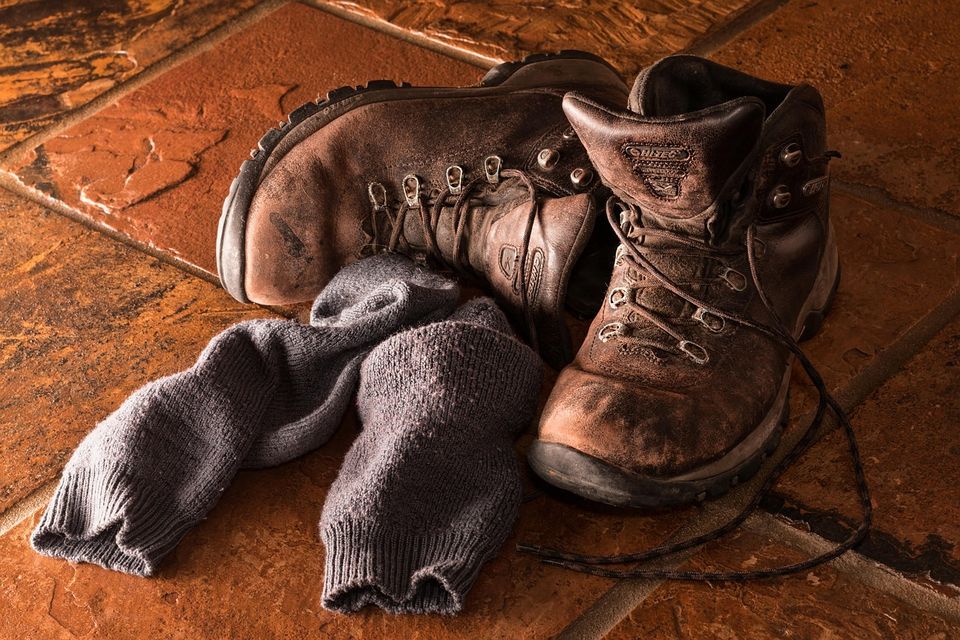
How to choose hiking socks that prevent blisters
How to choose hiking socks: pick wool or synthetic, never cotton, match thickness to your boot and carry a spare pair to keep your feet dry and blister free.
Élodie Fontaine2 min read